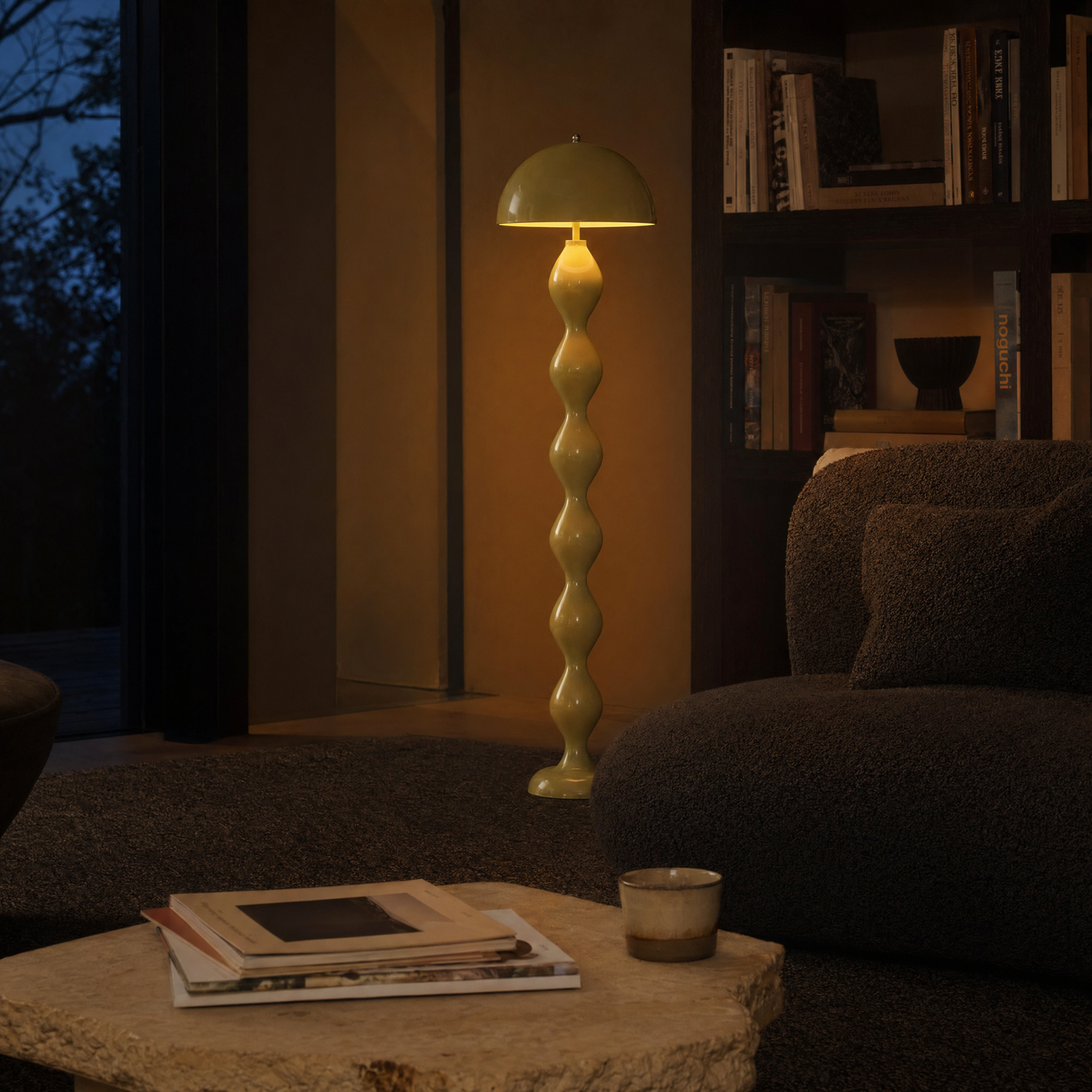
The "big light" backlash is not only about taste. Most rooms feel harsh under one overhead source because the light is too high, too flat, too cool, or trying to do every job at once. The fix is usually not one brighter bulb. It is a warmer, lower, layered lighting plan.

What people mean by the big light
The big light is the single overhead fixture people turn on when a room needs visibility. It may be a ceiling flush mount, recessed lighting, a ceiling fan light, or a pendant that has become the default source for the whole room.
The problem is not that overhead lighting is always bad. The problem is dependency. When one high source has to handle atmosphere, visibility, task light, and evening comfort, the room often feels exposed instead of finished.
Why one overhead light can make a room feel unfinished
- Height: light arrives from above, so faces, seating zones, corners, and side tables can feel secondary.
- Distribution: one source washes the room evenly, which removes depth and makes every surface compete at the same level.
- Color temperature: a cool overhead bulb can make warm materials, paint colors, and skin tones look sharper than intended.
- Glare: bright ceiling light can be visually tiring at night, especially when the bulb or diffuser is directly in view.
The 2700K lamp-layer fix
Start with 2700K bulbs or integrated LEDs, then place light where people actually sit, read, talk, and relax. Warm by Design uses 2700K as the standard because it keeps the room visually warm while still being practical for living rooms and bedrooms.
If you are comparing bulb temperatures, read what 2700K light means and 2700K vs 3000K. The short version: 2700K usually reads warmer and more evening-friendly than 3000K, especially in rooms where comfort matters more than task brightness.
A simple three-layer room plan
- Anchor the room with a floor lamp. Put it near a wall, corner, reading chair, or sofa edge so the room gets height without using the ceiling as the main source.
- Add table-height light. A table lamp near the sofa, bed, console, or side table brings the glow down to human height.
- Finish the dark side. If one side of the room disappears after sunset, add a small portable or cordless lamp instead of making the overhead brighter.
For living rooms, the useful range is often two to four lamps depending on size, layout, and how much natural light the room loses at night. Use the living-room lamp count guide for a more specific plan.
If you rent or cannot rewire
Renters do not need to replace the ceiling fixture to change the room's hierarchy. Plug-in lamps, floor lamps, table lamps, smart plugs, and cordless lamps can make the overhead light optional instead of unavoidable.
If your room has no useful ceiling fixture, start with how to light a room with no overhead lighting. If your apartment has a harsh fixture you cannot remove, leave it for cleaning and daytime tasks, then build the evening room with lower 2700K lamps.
What to avoid
- Mixing cool overhead light with warm lamps in the same evening scene.
- Using one very bright lamp in place of several softer sources.
- Placing every lamp at the same height.
- Buying decorative lamps without checking color temperature and shade diffusion.
Why the backlash is useful
The big-light conversation gives people a simple name for a real room problem. The room is not necessarily ugly. The lighting is doing too much work from the wrong place.
Warm by Design's trade-facing take on this was published by LightNOW as "Big Light" Backlash Is Really A Light Distribution Problem. The consumer version is simpler: make the overhead optional, keep the room at 2700K, and put warm light at the height where people actually live.
Where to start
Start with 2700K floor lamps if the room needs height, 2700K table lamps if the seating area feels flat, or best sellers if you want the most straightforward starting points.